Countering Harmful Speech
Harmful speech includes hate speech, mis/disinformation, harassment and incitement.
In common language, “hate speech” refers to offensive discourse targeting a group or an individual based on inherent characteristics (such as race, religion or gender) and that may threaten social peace.
To provide a unified framework for the United Nations to address the issue globally, the UN Strategy and Plan of Action on Hate Speech defines hate speech as…“any kind of communication in speech, writing or behaviour, that attacks or uses pejorative or discriminatory language with reference to a person or a group on the basis of who they are, in other words, based on their religion, ethnicity, nationality, race, colour, descent, gender or other identity factor.”
However, to date there is no universal definition of hate speech under international human rights law. The concept is still under discussion, especially in relation to freedom of opinion and expression, non-discrimination and equality.
Watch the video in Sinhala and Tamil.
What is the difference between mis- and disinformation?
The difference between mis- and disinformation lies with intent. Disinformation is information that is not only inaccurate, but is also intended to deceive and is spread in order to inflict harm.
Misinformation refers to the unintentional spread of inaccurate information shared in good faith by those unaware that they are passing on falsehoods. Misinformation can be rooted in disinformation as deliberate lies and misleading narratives are weaponized over time, fed into the public discourse and passed on unwittingly.
In practice, the distinction between mis- and disinformation can be difficult to determine. Mis- and disinformation and hate speech are related but distinct phenomena, with certain areas of overlap and difference in how they can be identified, mitigated and addressed. All three pollute the information ecosystem and threaten human progress. It can affect a broad range of human rights, undermining responses to public policies or amplifying tensions in times of emergency or armed conflict.
Watch the video in Sinhala and Tamil.
Hate speech versus freedom of speech
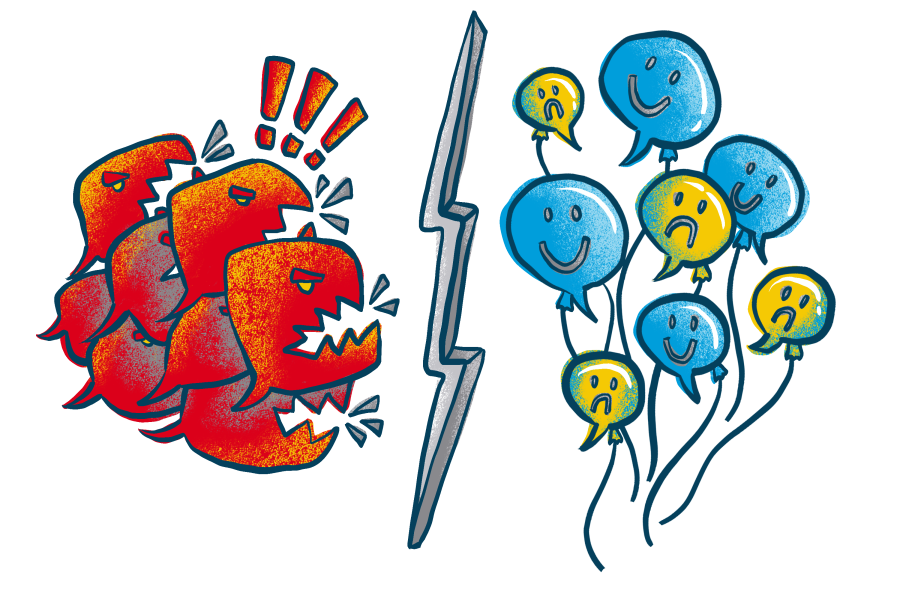
“Addressing hate speech does not mean limiting or prohibiting freedom of speech. It means keeping hate speech from escalating into something more dangerous, particularly incitement to discrimination, hostility and violence, which is prohibited under international law.” - United Nations Secretary-General António Guterres
The need to preserve freedom of expression from censorship by States or private corporations’ is often invoked to counter efforts to regulate hateful expression, in particular online.
Freedom of opinion and expression are, indeed, cornerstones of human rights and pillars of free and democratic societies. These freedoms support other fundamental rights, such as to peaceful assembly, to participate in public affairs, and to freedom of religion. It is undeniable that digital media, including social media, have bolstered the right to seek, receive and impart information and ideas. Therefore, legislative efforts to regulate free expression unsurprisingly raise concerns that attempts to curb hate speech may silence dissent and opposition.
To counter hate speech, the United Nations supports more positive speech and upholds respect for freedom of expression as the norm. Therefore, any restrictions must be an exception and seek to prevent harm and ensure equality or the public participation of all. Alongside the relevant international human rights law provisions, the UN Rabat Plan of Action provides key guidance to States on the difference between freedom of expression and “incitement” (to discrimination, hostility and violence), which is prohibited under criminal law. Determining when the potential of harm is high enough to justify prohibiting speech is still the subject of much debate. But States can also use alternative tools – such as education and promoting counter-messages – to address the whole spectrum of hateful expression, both on and offline.

According to the UN Special Rapporteur on Minority Issues, 70% of social media hate victims globally are minorities. In Sri Lanka, according to UN data, 51% of harmful speech online in 2024 targeted women and 24% minorities.
Through collaboration with tech companies and active efforts of local organizations, targeted online campaigns against minorities have decreased since 2021 — an encouraging trend. However, anti-Christian, anti-Muslim and anti-Hindu sentiments persist alongside harmful speech targeting women, especially those occupying public functions or those speaking up publicly.
Furthermore, events such as the Covid-19 pandemic and the war in Gaza have led to spikes in harmful speech online targeting specific communities, notably Muslims.
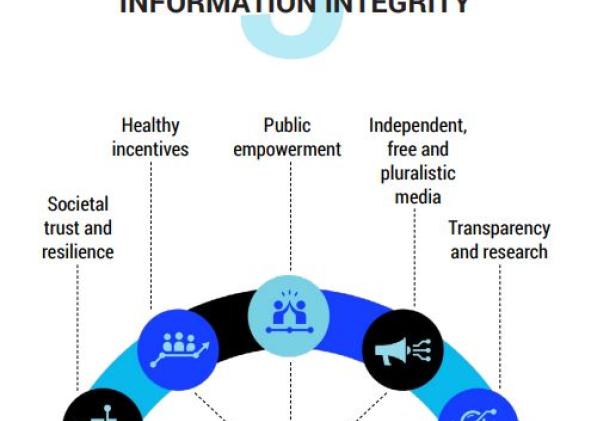
When information integrity is targeted, so is democracy – which depends on a shared, fact-based perception of reality. False narratives, distortions and lies breed cynicism, disbelief and disengagement. They undermine social cohesion, putting the Sustainable Development Goals further out of reach.
António Guterres
Secretary-General of the United Nations
Harmful speech incites violence and intolerance. The devastating effect of hatred is sadly nothing new. However, its scale and impact are now amplified by new communications technologies. Hate speech – including online – has become one of the most common ways of spreading divisive rhetoric on a global scale, threatening peace around the world.
The United Nations has a long history of mobilizing the world against hatred of all kinds to defend human rights and advance the rule of law. The impact of hate speech cuts across numerous UN areas of focus, from protecting human rights and preventing atrocities to sustaining peace, achieving gender equality and supporting children and youth.
Because fighting hatred, discrimination, racism and inequality are among its core principles, the United Nations is working to confront hate speech at every turn. This mission is enshrined in the UN Charter, in international human rights frameworks and in global efforts to achieve the Sustainable Development Goals.
There are historical precedents showing that hate speech can be a precursor to atrocity crimes.
In recent years, the world has witnessed several mass atrocities. In many of these cases, hate speech was identified as a “precursor to atrocity crimes, including genocide”. While the use of social media and digital platforms to spread hatred is relatively recent, the weaponization of public discourse for political gain is unfortunately not new. As history continues to show, hate speech coupled with disinformation can lead to stigmatization, discrimination and large-scale violence.
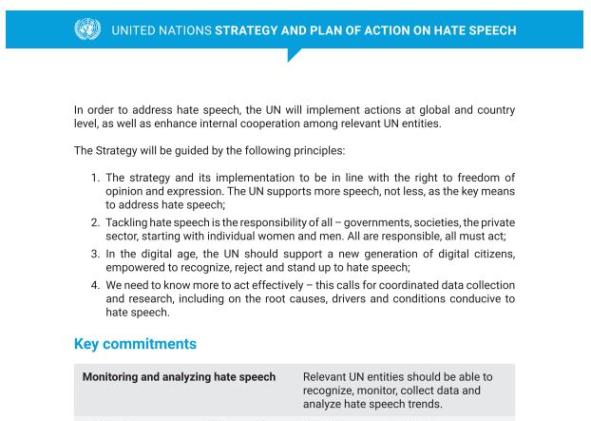
In response to the alarming trend of rising hate speech around the world, Secretary-General António Guterres launched the United Nations Strategy and Plan of Action on Hate Speech, on 18 June 2019.
Seeking to enhance the UN’s response to the global phenomenon of hate speech, this strategy is the outcome of close collaboration between 16 entities under the UN Working Group on Hate Speech and is coordinated by the United Nations Special Adviser on the Prevention of Genocide.
The Strategy makes a firm commitment to step up coordinated action to tackle hate speech, both at global and national levels.
What can we do to prevent and respond to harmful speech?
Hate speech occurs in all societies, whether offline or online. It can sometimes be hard to assess when a comment is meant as hate speech – especially when expressed in the virtual world. It can also feel overwhelming to try to deal with obviously hateful content.
However, there are many ways you can take a stand, even if you are not personally the victim of hate speech. And you can make a difference. The following tips may be helpful.
Pause
Refrain from making any hateful comments yourself and/or relaying such content. Whether online or offline, we should all act responsibly to stop the spread of hate and misinformation. Check out the United Nations #PledgetoPause campaign to find out why it’s important to take a moment to pause before you share content online. Learn how to do this responsibly – whether you’re forwarding a message, retweeting a story or watching a video in your feed.
Fact-check
In the digital world, it’s common to come across misinformation and harmful content, but it’s relatively easy to verify content you find is reliable. To detect false and biased information, including hate speech propaganda, be sure to check the content’s origin with the help of search engines, fact-checking tools and other reliable sources. You can also download images and run them through image search tools to find out where they appeared first.
Watch the video with Tamil subtitles here.
Report and Educate
Most online platforms and communities have rules to keep user discussions respectful and will let you easily report hate messages to administrators or moderators. Read social media platform guidelines and tips to protect users from harassment and hate speech. For more serious cases – which may constitute incitement to violence, harassment and/or threats prohibited by law – notify organizations fighting hate speech and/or file a complaint with police (or the public prosecutor). Some countries have online tools to make reporting hate speech easier.
Watch the video with Tamil subtitles here.